


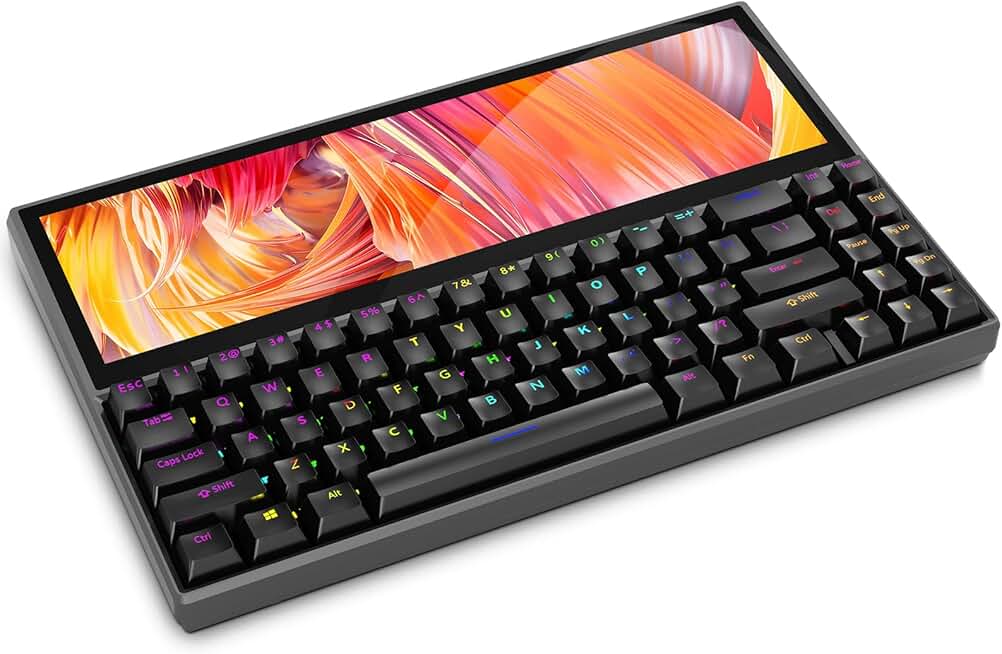
The keyboard has been one of the most essential tools in computing, enabling users to interact with technology efficiently. Over the years, keyboards have undergone remarkable transformations, especially with the integration of display screens. This article explores The Evolution of the keyboard with display: Past, Present, Future, highlighting key innovations and anticipating future developments.
The Past: From Mechanical to Early Digital Keyboards
The journey of keyboards began with mechanical designs. Early keyboards were purely mechanical devices used in typewriters, requiring significant physical effort to press each key. The evolution continued with the introduction of digital keyboards, which simplified typing and increased durability.
The concept of integrating displays with keyboards started in the late 20th century. Early experimental models featured small screens to show limited information like function settings or system status. Although rudimentary, these innovations laid the groundwork for the modern keyboards with built-in displays.
The Present: Smart Keyboards and Touch Integration
Today, keyboards have evolved far beyond traditional typing devices. Modern keyboards with display offer dynamic screens embedded directly into the device. Examples include OLED displays on individual keys or a small screen bar showing app shortcuts, notifications, or system stats.
These keyboards are popular among gamers, content creators, and professionals who benefit from visual feedback without switching screens. The current trend emphasizes interactivity, customization, and integration with software, making keyboards an extension of digital interfaces rather than a simple input device.
The Future: Adaptive, AI-Powered Keyboards
Looking forward, the future of keyboards promises even greater innovation. Flexible displays, AI-powered predictive text, and context-aware keys could redefine typing efficiency. Imagine keyboards that adapt their layout and display functions based on the software you are using, your workflow, or even your typing habits.
The future could also see entirely virtual keyboards with tactile feedback through advanced haptics, combining the familiarity of a keyboard with the limitless potential of a dynamic display. In essence, the next stage in The Evolution of the Keyboard With Display: Past, Present, Future will blur the line between hardware and interactive digital interfaces.
Conclusion
The journey of keyboards, from mechanical typewriters to smart, display-integrated devices, demonstrates the rapid pace of technological evolution. By examining The Evolution of the Keyboard With Display: Past, Present, Future, we gain insight into how human-computer interaction continues to innovate. The future promises keyboards that are adaptive, intelligent, and fully integrated with our digital lives, reflecting the ever-changing demands of technology and creativity.
