


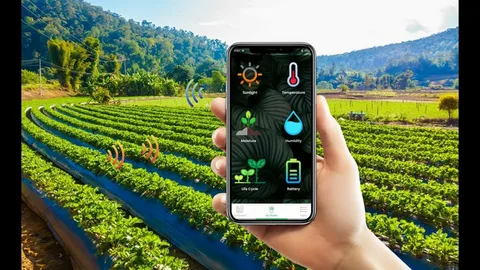
The integration of smart agriculture artificial intelligence (AI) in smart agricultural systems is transforming the way we approach farming and food production. With the global population rapidly increasing, the demand for efficient and sustainable agricultural practices has never been higher. Smart agricultural systems, powered by AI, are providing innovative solutions to help meet this demand while minimizing environmental impact. In this article, we explore the role of AI in agriculture, its applications, and the future potential of this technology in enhancing food security and farming productivity.
What is AI in Smart Agriculture?
AI refers to the ability of machines to perform tasks that typically require human intelligence, such as decision-making, learning, and problem-solving. When integrated into smart agricultural systems, AI leverages data from various sensors, satellites, and IoT devices to optimize farming practices. These systems use machine learning, computer vision, and other AI-driven technologies to analyze large volumes of agricultural data and provide real-time insights for farmers.
Key Benefits of AI in Agriculture
AI-powered smart agricultural systems offer several significant advantages that are helping to reshape the agricultural landscape:
1. Precision Farming
One of the core benefits of AI in smart agriculture is precision farming. AI systems can analyze soil conditions, weather patterns, and crop health in real time, enabling farmers to make data-driven decisions about irrigation, fertilization, and pest control. This leads to more efficient use of resources, improved crop yields, and reduced waste.
2. Crop Monitoring and Disease Detection
AI applications such as computer vision and image recognition are being used to monitor crops and detect diseases at an early stage. Drones and autonomous vehicles equipped with AI systems can scan large fields and identify signs of disease, pest infestations, or nutrient deficiencies. Early detection allows farmers to take action quickly, reducing the need for harmful pesticides and minimizing crop loss.
3. Predictive Analytics for Yield Forecasting
AI algorithms can analyze historical data and current conditions to predict crop yields with a high degree of accuracy. This predictive capability allows farmers to plan harvests more effectively, optimize supply chains, and reduce food waste. By understanding future trends, farmers can also make informed decisions about market pricing and resource allocation.
How AI is Revolutionizing Farm Management
The integration of AI in smart agricultural systems is not limited to crop monitoring. AI is also transforming how farms are managed at an operational level. Here’s how:
1. Automated Farm Equipment
AI-powered robots and autonomous vehicles are revolutionizing farm labor. Tractors, harvesters, and planters can now operate autonomously, using AI to navigate fields, plant seeds, or harvest crops with precision. This automation reduces labor costs and increases operational efficiency, allowing farmers to focus on more strategic tasks.
2. Optimized Irrigation and Water Management
Water scarcity is a significant concern in many regions, making water management a critical issue for farmers. AI-driven smart irrigation systems use real-time weather data, soil moisture levels, and crop requirements to deliver precise amounts of water, minimizing waste and ensuring that crops receive the optimal amount of water for growth.
3. Supply Chain Optimization
AI helps streamline the agricultural supply chain by predicting demand, optimizing logistics, and reducing waste. AI can track the movement of crops from farm to market, ensuring that products are delivered in the most efficient manner possible. This results in lower transportation costs, reduced spoilage, and fresher produce reaching consumers.
Future Prospects of AI in Smart Agricultural Systems
The future of AI in agriculture is filled with potential. As AI technology continues to evolve, we can expect further advancements in precision farming, robotics, and data analytics. In particular, the integration of AI with other emerging technologies like blockchain, drones, and IoT will create even smarter agricultural systems capable of further enhancing food production and sustainability.
1. AI-Driven Breeding Programs
AI can also play a critical role in crop breeding. By analyzing vast amounts of genetic data, AI can help identify the best traits for crops, such as drought resistance, pest resistance, or improved nutritional value. These advancements could lead to the development of more resilient crops that are better suited to changing climate conditions and global food demands.
2. Sustainability and Environmental Impact
AI can help farmers adopt more sustainable practices by providing insights into how to reduce chemical usage, conserve water, and protect soil health. With AI, farmers can monitor environmental conditions and adjust practices to ensure minimal impact on ecosystems while maximizing productivity.
Conclusion: The Future of Agriculture is Smart and AI-Powered
The integration of artificial intelligence in smart agricultural systems is revolutionizing the industry by making farming more efficient, sustainable, and data-driven. With applications ranging from crop monitoring and disease detection to automated equipment and water management, AI is helping farmers tackle the challenges of modern agriculture.
