


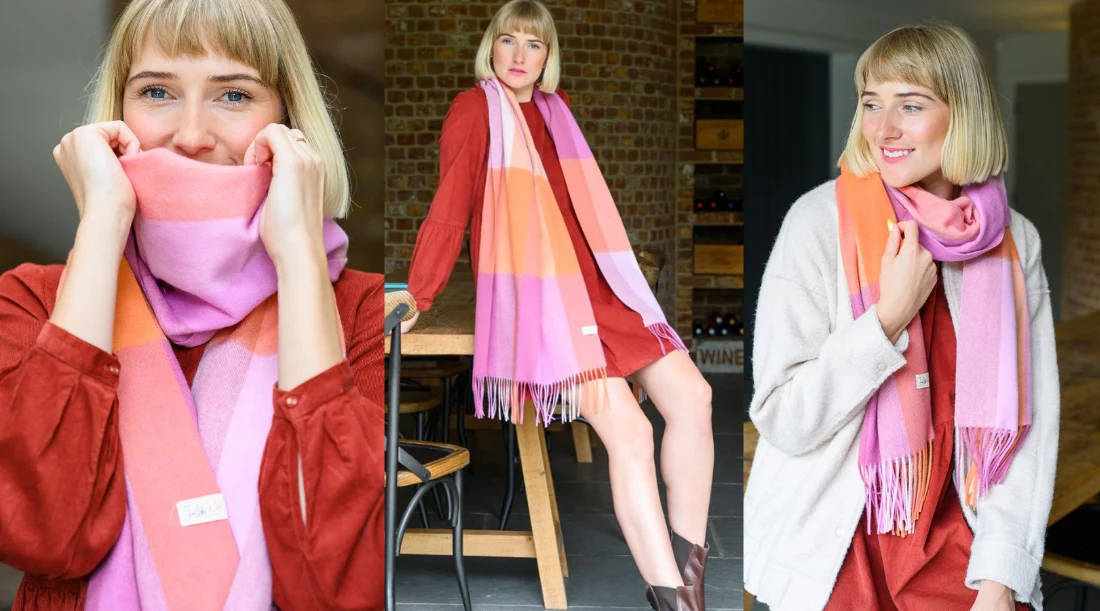
Quick Answer
The best scarves for winter are made from natural fibres like lambswool, cashmere, or merino wool, which trap warm air efficiently without adding visual bulk. A tightly woven lambswool or cashmere scarf offers the ideal balance of warmth, softness, and lightweight comfort, outperforming thicker acrylic scarves that trap moisture and lose their shape.
Why Bulk Isn’t the Same as Warmth
Piling on a thick scarf feels like the obvious way to stay warm, but bulk and warmth aren’t the same thing. Among the best scarves for winter, the warmest options are often surprisingly lightweight.
Warmth comes from how well a fibre traps air, not from how much fabric is wrapped around your neck. Natural fibres like wool and cashmere have a crimped structure that holds pockets of warm air close to the skin, insulating effectively without piling on extra fabric.
Why it matters:
- A thinner, well-made natural fibre scarf can outperform a thick synthetic one.
- Bulky scarves add discomfort under coats and restrict movement.
- The right fibre choice matters more than the thickness of the weave.
How it works:
Natural fibres like lambswool and cashmere have a crimped, springy structure at a microscopic level. This traps warm air in small pockets, creating insulation. Synthetic fibres like acrylic are smoother and flatter, so they need far more bulk to achieve the same warmth.
Benefits:
- Comfortable warmth that doesn’t restrict layering under coats.
- A neater, more polished look than a bulky scarf allows.
- Better breathability, so you don’t overheat on public transport or indoors.
Common mistakes:
Many shoppers equate a heavier, thicker scarf with better warmth and end up overheating indoors or struggling to layer it under a coat. Focus on fibre quality first, thickness second.
What Makes a Winter Scarf Actually Warm?
Not every scarf marketed for winter performs the same way once temperatures drop.
Why fibre choice matters most:
The fibre determines how well a scarf insulates, breathes, and holds its shape over a season of wear. A warm winter scarf made from natural fibre will typically outperform a synthetic one of the same thickness, because natural fibres regulate temperature rather than simply blocking wind.
How to judge a scarf’s true warmth:
- Check the fibre content first; natural fibres generally insulate better than synthetic ones.
- Look at the weave density; tighter weaves trap more air.
- Consider the weight in grams per square metre if listed; higher isn’t always better if the fibre is coarse.
- Check for breathability; a warm scarf shouldn’t feel stuffy or damp against the skin.
- Look for natural crimp or texture in the fibre, a sign of good insulating structure.
Benefits of choosing well:
- Reliable warmth across a full range of winter conditions, from crisp and dry to damp and windy.
- A scarf that performs for years rather than losing its insulating properties after a season.
- Comfort that lasts from morning commute to evening plans without adjusting or removing it.
Common mistakes:
Buying based on price alone often means sacrificing fibre quality. A cheap acrylic scarf may look similar to a lambswool one in photos, but the difference in actual winter performance is significant.
Comparing the Best Winter Scarf Fibres
Choosing between fibres comes down to how you’ll wear the scarf, your budget, and how much care you’re willing to put in.
| Feature | Lambswool | Cashmere | Merino Wool | Acrylic |
|---|---|---|---|---|
| Warmth | Excellent | Excellent | Very good | Moderate |
| Softness | Soft, slight natural texture | Extremely soft | Very soft | Soft but synthetic feel |
| Durability | Very durable | Delicate, needs care | Durable | Prone to pilling |
| Breathability | High | High | High | Low |
| Price | Mid-range | High | Mid-to-high | Low |
| Sustainability | Natural, biodegradable, renewable | Natural but resource-intensive to produce | Natural, renewable | Synthetic, petroleum-based |
| Best For | Everyday luxury, longevity | Ultra-soft occasion wear, gifting | Active use, sensitive skin | Budget buyers, short-term use |
In short: if you want the best all-round balance of warmth, durability, and value, a Scottish lambswool scarf is hard to beat. If softness and drape are the priority, a luxury cashmere scarf is worth the investment. Merino suits those wanting a lighter, more athletic feel, while acrylic remains a budget option with clear trade-offs in warmth and longevity.
What to Look for in the Best Winter Scarf
A scarf that genuinely performs through winter needs more than a soft first touch in the shop.
- Natural fibre content – Lambswool, cashmere, and merino all outperform synthetic fibres for warmth and breathability.
- Tight, even weave – A denser weave traps more warm air and resists stretching out of shape.
- Generous length – Around 180–200cm allows for multiple wrapping styles, including a double loop for extra warmth on the coldest days.
- Neutral or versatile colour – A shade that pairs with most of your coats gets far more wear across the season.
- Finished edges – Fringed or hand-finished edges are often a sign of more careful, traditional construction.
- Suitable weight – Heavier for exposed, windy conditions; lighter for layering under coats or indoor-outdoor days.
- Realistic care requirements – Choose a fibre that matches how much maintenance you’re actually willing to do.
How to Choose the Perfect Winter Scarf for Women
Follow these steps to find a scarf that will genuinely earn its place in your winter wardrobe.
- Decide on your priority. Warmth, softness, durability, or budget rarely all peak in the same fibre, so choose what matters most to you.
- Check the fibre content. Look for “100% lambswool,” “100% cashmere,” or “100% merino wool” rather than vague blends.
- Feel the weave. A tightly woven or knitted scarf resists pilling and holds its shape far longer than a loose one.
- Consider your typical winter activities. Commuting and city wear suit a lighter scarf; countryside walks and exposed conditions call for a heavier weave.
- Measure the length and width. Longer scarves, around 180–200cm, offer more styling flexibility, including double wraps for extra warmth.
- Choose a versatile colour first. Neutrals and classic tones work with the widest range of coats.
- Check the finish and edges. A soft, brushed finish and neat, fringed edges usually indicate better-quality construction.
- Confirm the origin and craftsmanship. Scottish-woven scarves are typically produced using long-established techniques and stricter quality control.
- Read the care label before buying. Make sure the washing and storage requirements suit your lifestyle.
Best Colours for Winter Scarves
The right colour depends on your existing coats and how often you plan to wear the scarf.
- Neutral – Beige and stone tones work with almost any coat colour.
- Camel – A classic pairing with black, navy, and grey outerwear.
- Navy – Versatile enough for both smart and casual looks.
- Grey – Complements bold colours and monochrome outfits alike.
- Black – The most adaptable choice for evening wear and formal settings.
- Burgundy – Adds warmth and depth without being too bold.
- Pink – A softer, more feminine option for everyday wear.
- Tartan – A distinctly Scottish choice that adds pattern and heritage, and makes a popular wool scarf gift for women.
How to Style a Winter Scarf
The best winter scarves adapt easily across your week.
- Casual – Loop it loosely over a knit jumper and jacket for effortless everyday warmth.
- Office – Drape it over a tailored coat for a polished, professional finish.
- Evening – Pair a darker shade with a wool coat for smart-casual evening events.
- Travel – Use it as a light, packable layer for flights or train journeys, doubling as a blanket if needed.
- Weekend – Wrap it in a chunky knot over outdoor jackets for countryside walks or city strolls.
Caring for Your Winter Scarf
Proper care keeps any natural fibre scarf performing well for years, whatever it’s made from.
Washing: Hand wash in cool water with a gentle wool or cashmere detergent, or dry clean if the label recommends it. Avoid hot water, which can shrink and felt natural fibres.
Drying: Lay flat on a clean towel away from direct heat or sunlight. Never tumble dry, and avoid hanging while wet, as this can stretch the fabric out of shape.
Storage: Fold rather than hang, and store in a breathable bag away from moths. Cedar blocks or lavender sachets help deter pests naturally.
Removing pilling: Use a fabric shaver or fine-tooth wool comb to gently remove any bobbling, working in the direction of the weave.
[ADD ORIGINAL STAT HERE]
Why Choose Red Plaids Co?
For [ADD YEARS] years, Red Plaids Co has focused on one thing: making premium wool accessories that keep you warm without unnecessary bulk.
Every scarf in our collection, whether lambswool or cashmere, is woven using traditional techniques and quality-inspected before it reaches you. We choose fibres for genuine winter performance, not just appearance, so you get warmth that lasts the whole season and beyond.
[ADD CUSTOMER TESTIMONIAL]
Whether you’re building a capsule winter wardrobe or searching for the perfect gift, our range covers everyday neutrals through to statement tartans, all finished to the same exacting standard.
Browse our full Lambswool Scarf Collection or Cashmere Scarf Collection and find the scarf that will see you through winter after winter.
FAQs
What is the warmest type of scarf for winter?
Lambswool and cashmere are among the warmest natural fibres for winter scarves, thanks to their crimped fibre structure, which traps warm air efficiently without adding bulk.
Can a thin scarf still be warm?
Yes. Fibre quality matters more than thickness. A well-made lambswool or cashmere scarf can be thinner than an acrylic one and still provide comparable or greater warmth.
What’s the best scarf material for cold, windy weather?
A tightly woven lambswool scarf is a strong choice for windy conditions, as its dense weave and natural fibre structure block wind while still allowing the fabric to breathe.
Is cashmere or lambswool better for winter?
Both offer excellent warmth. Cashmere is softer and lighter, ideal for layering without bulk, while lambswool is generally more durable for frequent, everyday winter wear.
How do I stop my winter scarf from feeling bulky under a coat?
Choose a lighter-weight natural fibre scarf, such as a fine lambswool or cashmere weave, and wrap it in a single loop rather than multiple thick layers.
What length scarf is best for winter?
A length of around 180–200cm offers the most flexibility, allowing for a single wrap, a double loop for extra warmth, or a looser drape depending on the conditions.
Are natural fibre scarves worth the extra cost compared to acrylic?
Generally, yes. Natural fibres like lambswool and cashmere offer better warmth, breathability, and longevity, often working out better value over several winters compared with cheaper synthetic options.
How often should I wash my winter scarf? Natural fibre scarves don’t need frequent washing. Airing them out between wears and washing only when visibly soiled, following the care label, helps preserve their shape and softness.
Conclusion
The best scarves for winter aren’t necessarily the thickest ones. A well-made lambswool or cashmere scarf delivers genuine warmth, softness, and breathability without the bulk of a heavier synthetic alternative, and it will keep performing winter after winter with the right care. Whether you prioritise everyday durability or ultimate softness, choosing natural fibre is the surest way to stay warm without compromise.
Ready to find yours? Shop Women’s Scarves at Red Plaids Co and stay warm this winter without the bulk.
You may also like to explore our Lambswool Blanket Collection, our Cashmere Scarf Collection, or our curated Gift Collection for more premium wool pieces. Visit our homepage to explore the full Red Plaids Co range.
