


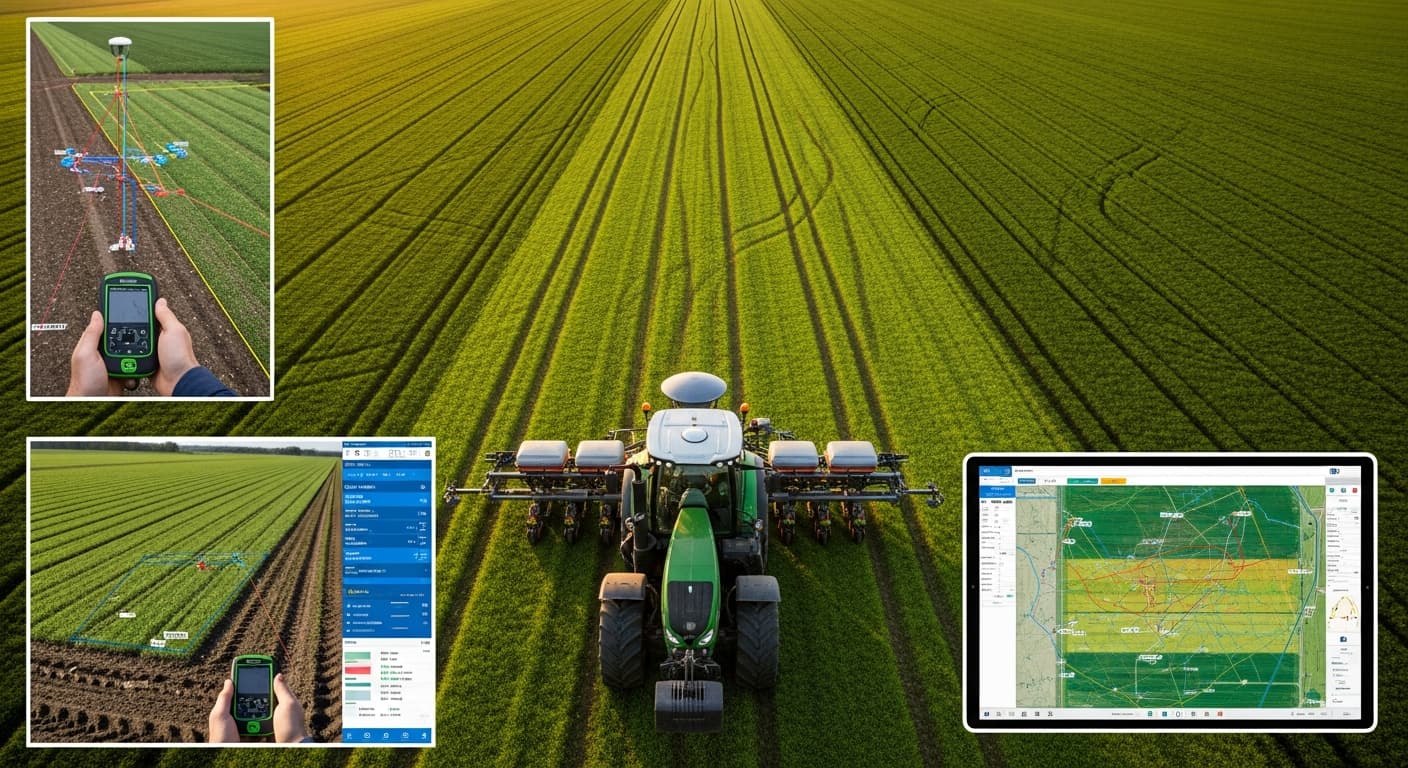
Introduction to Precision Farming GNSS Strategies for Reducing Input Costs
Modern agriculture is rapidly evolving, and precision farming gnss Strategies for Reducing Input Costs are at the center of this transformation. By using satellite-based positioning systems, farmers can make more informed decisions, reduce waste, and improve efficiency across every stage of crop production.
At its core, Precision Farming GNSS Strategies for Reducing Input Costs focus on using accurate geolocation data to optimize field operations such as planting, fertilizing, spraying, and harvesting. This leads to smarter resource usage and significantly lower operational expenses.
Understanding GNSS in Precision Agriculture
GNSS (Global Navigation Satellite Systems) includes satellite constellations like GPS, Galileo, GLONASS, and BeiDou. In agriculture, these systems enable centimeter-level accuracy when paired with advanced receivers and correction technologies such as RTK (Real-Time Kinematic).
When integrated into farm machinery, GNSS allows for:
- Exact field mapping
- Automated steering systems
- Overlap reduction in spraying and fertilizing
- Precise seeding patterns
These capabilities directly support Precision Farming GNSS Strategies for Reducing Input Costs by ensuring that every input is applied exactly where it is needed—no more, no less.
Key Precision Farming GNSS Strategies for Reducing Input Costs
1. Variable Rate Application (VRA)
One of the most effective Precision Farming GNSS Strategies for Reducing Input Costs is Variable Rate Application. This method uses GNSS data combined with soil and crop sensors to apply fertilizers, pesticides, and seeds at varying rates across a field.
Instead of uniform application, farmers can:
- Increase inputs in nutrient-deficient zones
- Reduce inputs in high-fertility areas
- Avoid over-application and waste
This targeted approach minimizes unnecessary spending while maximizing yield potential.
2. Automated Guidance and Steering Systems
Automated steering systems guided by GNSS technology reduce overlap during planting, spraying, and harvesting. Even small overlaps can lead to significant input waste over large fields.
By implementing this strategy, farmers can:
- Reduce fuel consumption
- Minimize seed and chemical overlap
- Improve machinery efficiency
This makes automated guidance one of the most impactful Precision Farming GNSS Strategies for Reducing Input Costs in modern agriculture.
3. Field Mapping and Boundary Optimization
Accurate field mapping ensures that every square meter of farmland is accounted for. GNSS-enabled mapping tools help farmers define precise field boundaries and identify unproductive zones.
Benefits include:
- Better land utilization
- Reduced wasted inputs on non-arable areas
- Improved planning for irrigation and fertilization
This strategy plays a crucial role in Precision Farming GNSS Strategies for Reducing Input Costs by eliminating guesswork in field management.
4. Yield Monitoring and Data Analysis
Harvesters equipped with GNSS and yield sensors collect detailed data about crop performance across different zones of a field. This data is then analyzed to guide future decisions.
Farmers can:
- Identify high and low-performing areas
- Adjust future input strategies
- Improve long-term soil management
Data-driven farming ensures that Precision Farming GNSS Strategies for Reducing Input Costs are continuously refined for better efficiency each season.
Economic Benefits of GNSS-Based Precision Farming
The financial advantages of adopting GNSS in agriculture are significant. Farmers experience:
- Lower fertilizer and pesticide costs
- Reduced fuel consumption
- Increased machinery efficiency
- Higher return on investment (ROI)
By implementing Precision Farming GNSS Strategies for Reducing Input Costs, farms can operate more sustainably while maintaining or improving productivity levels.
Challenges in Implementation
Despite its benefits, GNSS-based precision farming comes with challenges:
- High initial investment in equipment
- Need for technical training
- Dependence on reliable satellite signals
- Integration with existing farm machinery
However, as technology becomes more affordable, adoption is steadily increasing worldwide.
Future of Precision Farming with GNSS
The future of agriculture will rely heavily on automation and data-driven decision-making. Artificial intelligence, IoT sensors, and advanced GNSS systems will work together to further enhance efficiency.
In the coming years, Precision Farming GNSS Strategies for Reducing Input Costs will likely become standard practice, not an optional upgrade, as global food demand continues to rise and resource optimization becomes critical.
Conclusion
Precision Farming GNSS Strategies for Reducing Input Costs are reshaping how modern farms operate. Through technologies like variable rate application, automated steering, field mapping, and yield monitoring, farmers can significantly reduce waste and improve profitability.
